Avec nos meilleurs compliments - Le directoire
Mit freundlicher Empfehlung - Der Vorstand
Con nuestra mejor consideracion - La Junta Directiva
I got those words from a card. Obviously it was coming with something attached to it. That something was palm size chocolate box wrapped nicely with cinnamons paper. Smells good too. But nothing else written on it. Eagerly I opened it, and what did I found?.... Another box! But this time it was crystal clear box with a coffee bean right in the middle of it... That's it? No! When you look carefully at the bean, you'll see two words written with golden ink that say "Good Luck!"
We wish each other good luck for all sorts of reasons and in all sorts of different ways from our culture to culture: at the beginning of a new year, on a birthday or name day, at a wedding or the birth of a child. Often these wishes are link with symbols or rituals that are hundreds or even thousands of years old. But in many cases we are not really aware of their origins or their significance.
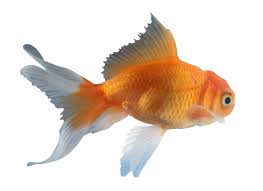
I understand that goldfish attracts luck, and this ornamental little member of the carp family is found in virtually every garden pond in the Far East. In Japan the name of this swimming lucky charm is similar to the word for love, and it is regarded with special affection there.

Because the chimney sweep clears out the dark nooks and crannies where the evil spirit can hide, he is regarded as a symbol of luck with almost magical powers. Shaking hands with the chimney sweep or crossing his path can bring you good luck.
 Sources from antiquity through to the Middle Ages record a special way of helping children with the reading skills. They were given a printed, hand-written, or baked alphabet to eat. The small letters were stirred into their porridge, broth or soup.

The Oriental dragon embodies the principle of masculine strength. It can confer eternal life, and offers reliable protection against all sorts of evil spirits.
 The fly agaric mushroom is a symbol of luck in shamanism and represents the transitions between dream and reality, death and life. Of course it is by no means lucky if you eat too much, because it is highly poisonous, but in small amounts it can lead to a state of trance. It is found in the forests of Central and Eastern Europe, and according to the saga it grows where the foam fell from the mouth of Odin's horse.
 The horseshoe is a lucky symbol, and is often seen hanging over a stable door or the entrance to a house. It is said to drive away evil spirits, who are supposed to be afraid of iron. But it is very important that the horseshoe has been found accidentally. Then the gods will have put it in your path.
 Throughout the western world, the Orient, the Indian sub-continent, and Central Asia there is the widespread belief that special trees are closely linked with good fortune in our lives. Often a tree of life is planted when a child is born. As the tree flourishes it ensures that the child will grow up healthy. Evergreen trees or fruit trees are particularly popular for this purpose in many regions. A young tree is hauled onto the roof of new buildings in parts of Europe for a topping-out ceremony intended to keep evil spirits and lightning away from the building and its future occupants.

The pig is a symbol of luck in many parts of Europe. The wild boar was holy for the Celts, and was the favorite animal of the great goddess, who was revered under a variety of names as Mother Earth and in winter also as the Goddess of Death.
 Most people probably associate the four-leaf clover with the luck of the Irish, but it is also a powerful symbol in India and Nepal, where it is used and honored as a mandala for meditation. it represents the world, and the four leaves symbolize the four parts of the earth.
 Whether you find one on the street or in your pudding, a lucky coin is a good thing to have. This symbol of luck goes back to Ancient Greece, when money was linked to rituals and initially bore the images of deities. Later with the rise of Christianity these gave way to images of saints, before it became more usual to depict the ruler of a country.
 The ladybird has a positive image throughout Europe, and it is said to have prophetic powers. It is supposed to be lucky if it lands on your hand or on your clothes. For young girls it is said to be a harbinger of love.
 Mistletoe was revered in ancient times in Europe for its magical powers. It was a wonder-cure against all kinds of illnesses, and protected against demons. It was often hung up over a door or window, or on the gables of house to protect the inhabitants and drive away misfortune. The habbit of kissing under the mistletoe at Christmas time is relic of its use by ancient Celts as a fertility symbol. The parasitic plant was particularly holy when it grew on the oak tree. It had to be cut by the light of the full moon with a golden sickle, and was not allowed to touch the earth.
And how about the coffee bean that I got? And what is that good luck for? Even so, it was sent in no particular time with no particular event. I just don't get it... but these lucky charm thing sure will become a very unusual gift someone would give...

No comments:
Post a Comment